Built in Pittsburgh. Engineered for the joints that move tomorrow's robots.
Tendonkindle makes compact joint actuators — BLDC + harmonic drive + full FOC firmware — purpose-built for humanoid robots, exoskeletons, and advanced manipulation research.
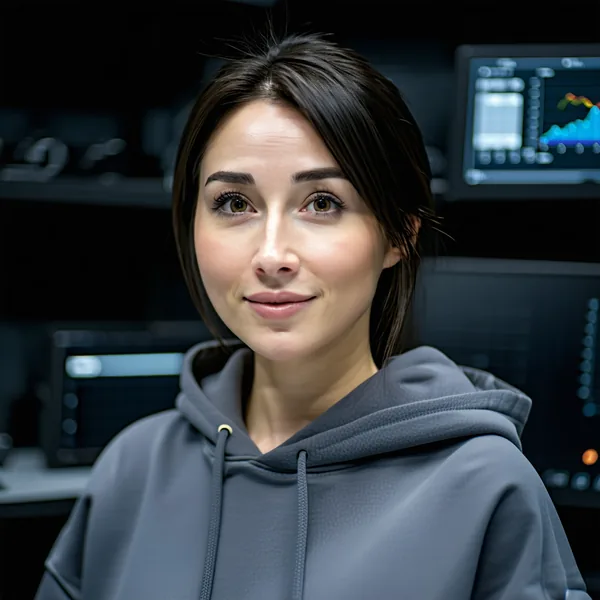
James Whitaker, CEO & Founder
James Whitaker spent 2018 to 2023 at CMU's Robotics Institute — first as a PhD student on the Tartan-series legged locomotion platform, then as a postdoc building manipulation primitives for dexterous in-hand tasks. Every platform had the same load-bearing constraint: joint actuators.
The actuators available through standard channels were industrial servo products designed for factory arms cycling at 1–2 Hz PID setpoints. Drop one into a bipedal robot and the problems were immediate: no published backdrivability spec, no ROS 2 hardware_interface, no real FOC implementation — just encoder-based PID with PWM duty cycle as the output. The 400 Hz closed-loop torque bandwidth that whole-body controllers require was simply not there. Swapping actuators mid-project cost three months of integration work each time.
By 2022 he was writing a custom FOC firmware layer on top of every industrial actuator the lab purchased — Park/Clarke transform, DQ-frame PI controllers, SVPWM — because nothing shipped with it pre-tuned. In early 2024 he decided it was faster to build the actuator correctly from the start than to keep patching hardware that was never designed for legged robots.
The first TK-120 prototype came off the bench in Pittsburgh in mid-2024: a 120 mm BLDC outrunner with a 100:1 harmonic drive flex-spline, AS5048 19-bit absolute encoder, and STM32-based FOC firmware that connects to ROS 2 via micro-ROS agent on first power-on. No configuration wizard. No porting.
Tendonkindle is bootstrapped and Pittsburgh-based. We do not have a logo cloud because OEM evaluations are under NDA. We do not have a pricing page because quantities, NRE, and lead times are discussed per engagement. What we have is hardware that closes the spec sheet without asking your controls team to spend a sprint on firmware archaeology.

"A full-size humanoid needs 20–40 actuators. The torque density, backdrivability, and ROS 2 firmware integration requirements have to be met by a single product, in a single package, with a published spec. That didn't exist. So we built it."
— James Whitaker, CEO & Founder, Tendonkindle
The people behind the actuators



Pittsburgh CMU Corridor
We're located in Pittsburgh's CMU/University of Pittsburgh robotics corridor — one of the densest concentrations of robotics research talent in the United States. CMU's Robotics Institute, Pitt's NREC, and Carnegie Mellon's Mechanical Engineering department are all within walking distance of our workspace.
This proximity matters for engineering quality: we can iterate on hardware with academic feedback loops measured in days, not quarters.
We are not a general-purpose servo supplier. Tendonkindle builds specifically for humanoid joints, exoskeleton frames, and precision manipulation — applications where backdrivability, torque density, and ROS 2 firmware integration are non-negotiable requirements. Industrial servo applications with simple point-to-point motion at slow cycle rates are outside our focus.
Pittsburgh, PA 15213
[email protected]
+1 (412) 226-0734